



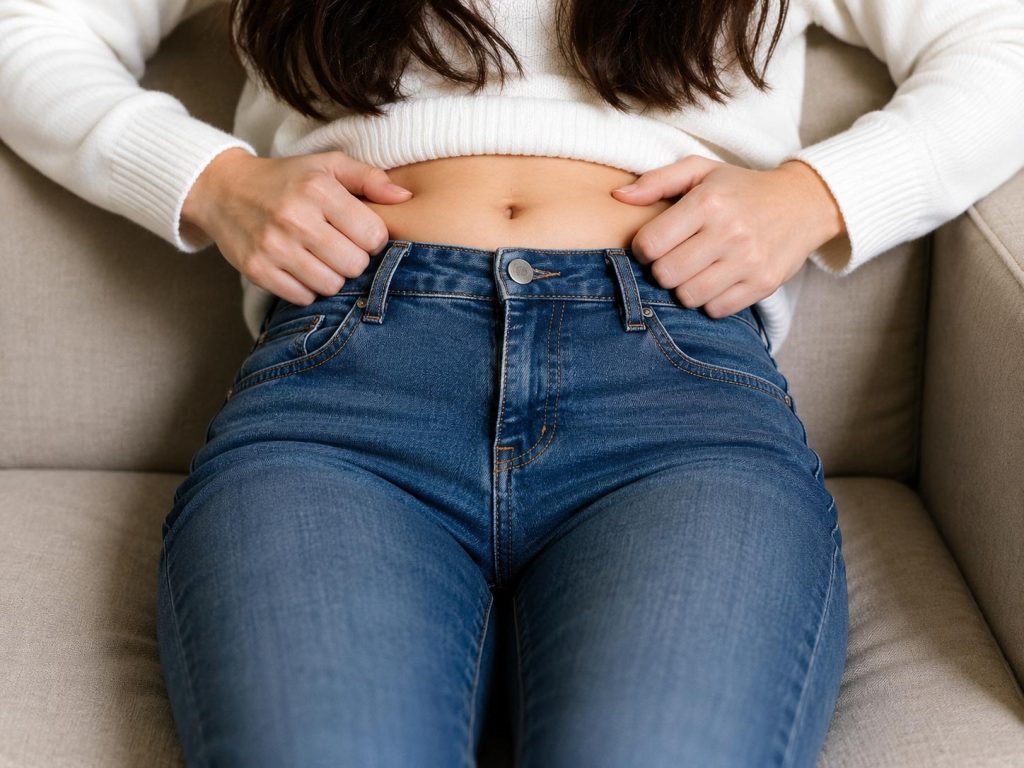
Belly Fat Explained: Subcutaneous vs. Visceral Fat and What You Can Do
Belly fat is not all the same. Broadly, abdominal fat can be divided into subcutaneous fat, which sits beneath the skin, and visceral fat, which is located deeper inside the abdomen around the internal organs. Understanding which type is contributing most to abdominal fullness can help clarify whether the priority should be overall health and weight management, localized contouring, or a combination of approaches.
If your lower abdomen feels soft and pinchable, or if fullness is concentrated around the waist and love handles, subcutaneous fat may play a larger role. If the abdomen appears more broadly rounded, including the upper abdomen, deeper visceral fat may also be part of the picture.
These patterns are not interchangeable, which is why simply asking how to “lose stomach fat” does not always lead to the most useful answer.

The Two Main Types of Belly Fat
1. Subcutaneous Fat: The Fat You Can Usually Pinch
Subcutaneous fat is stored directly beneath the skin. Around the abdomen, it commonly contributes to softness or fullness in areas such as the lower belly, around the navel, the flanks, and the love handles.
Individual anatomy, genetics, and patterns of fat distribution can influence where subcutaneous fat is most noticeable. For some people, these areas remain relatively prominent even after overall body weight or body-fat levels have decreased.
The foundation of management remains overall weight and body-fat control through sustainable nutrition and regular physical activity.
Core exercises and stretching can also improve strength, posture, and the appearance of the abdominal wall. However, abdominal exercises should not be relied on as a predictable method of selectively removing fat from the abdomen. A clinical study of abdominal exercise alone, for example, did not find a reduction in abdominal subcutaneous fat.
When a localized area such as the lower abdomen or flanks remains a concern despite consistent lifestyle efforts, a professional consultation may help determine whether a localized body-contouring approach is appropriate.
2. Visceral Fat: Fat Deeper Inside the Abdomen
Visceral fat is located deeper within the abdominal cavity around the internal organs rather than immediately beneath the skin.
A generally rounded abdominal profile, particularly when fullness extends beyond the lower abdomen, may raise the question of deeper abdominal fat. Appearance alone, however, should not be used to determine the amount of visceral fat.
This distinction matters because visceral adiposity is more closely associated with metabolic health concerns than a purely localized cosmetic fat pocket. Research has linked higher visceral fat levels with metabolic risk factors including insulin resistance and cardiovascular risk.
For this reason, visceral fat should not be approached simply as an aesthetic contour problem.
Frequent overeating, highly refined carbohydrates, alcohol intake, irregular eating patterns, inadequate sleep, and a generally sedentary lifestyle are among the lifestyle factors that should be reviewed when abdominal weight gain is a concern.
How to Approach Abdominal Fat
A useful approach to belly fat begins by identifying the type of problem rather than immediately choosing a treatment.
Focus on Sustainable Eating Habits
Extreme calorie restriction is rarely a sensible long-term strategy.
Instead, consider the overall quality and consistency of your diet. Reducing excessive added sugars, sugary drinks, refined carbohydrates, alcohol, and frequent late-night eating can be an important part of weight management.
Building meals around vegetables and other fiber-containing foods together with adequate sources of protein can also support a more sustainable eating pattern.
If visceral fat and overall abdominal weight gain are the main concerns, lifestyle management remains especially important. A localized aesthetic procedure should not be viewed as a substitute for addressing these broader factors.
Combine Aerobic Activity With Core Training
Walking, running, cycling, and other forms of aerobic exercise involve the whole body and can support overall body-fat management.
Core exercises such as planks and dead bugs serve a different purpose. They help condition and strengthen the muscles of the abdominal wall, which can make the midsection appear more supported as overall body composition changes.
The key distinction is that strengthening the abdominal muscles and selectively removing abdominal fat are not the same thing.
Do Not Overlook Sleep and Stress
Sleep and stress are also relevant parts of overall weight and metabolic management.
The relationship between stress hormones such as cortisol and abdominal fat is complex, so it is overly simplistic to say that stress automatically “creates belly fat.” Research does, however, support an association between stress responses, cortisol patterns, and abdominal fat distribution in some individuals.
Rather than treating sleep as an afterthought, maintaining a regular sleep pattern and allowing adequate recovery should be considered alongside nutrition and exercise.
When Localized Body Contouring May Be Considered
Some people make meaningful changes to their diet and activity level yet continue to notice relatively localized fullness around the lower abdomen, waist, or love handles.
In these situations, pursuing increasingly restrictive dieting simply to change one small area may not always be the most appropriate approach.
The original Korean article discusses localized injectable treatments and device-based or laser body-contouring procedures as options that may be considered after professional evaluation.
The appropriate treatment, however, depends on the individual’s anatomy, fat distribution, overall health, and the specific technology or procedure being considered. No single body-contouring method should be assumed to be suitable for everyone.
It is also important to distinguish aesthetic body contouring from weight-loss treatment. Non-invasive body-contouring technologies are intended to address localized appearance concerns and should not be presented as a treatment for obesity or as a substitute for the health benefits of weight loss.
Subcutaneous Fat and Visceral Fat Need Different Priorities
A soft lower-belly fold or love handle and a broadly protruding abdomen may both be described as “belly fat,” but they do not necessarily represent the same concern.
For localized subcutaneous fat, overall body-fat management remains the foundation, with professional contouring options potentially considered when a specific area remains bothersome.
For visceral fat, the priority should be broader lifestyle and metabolic health management rather than attempting to treat the problem as a localized cosmetic fat pocket.
Understanding that distinction can prevent unnecessary dieting and help set more realistic expectations about what different approaches can and cannot address.
Conclusion
Managing abdominal fat is not simply about eating less or doing more abdominal exercises.
Nutrition, regular physical activity, sleep, and sustainable weight management provide the foundation. From there, persistent localized areas such as the lower abdomen or love handles can be evaluated separately to determine whether professional body-contouring treatment is appropriate.
The most useful approach is therefore not to treat every abdominal concern in the same way, but to consider where the fat is distributed, what may be contributing to it, and which goals are related to health versus localized body contour.