



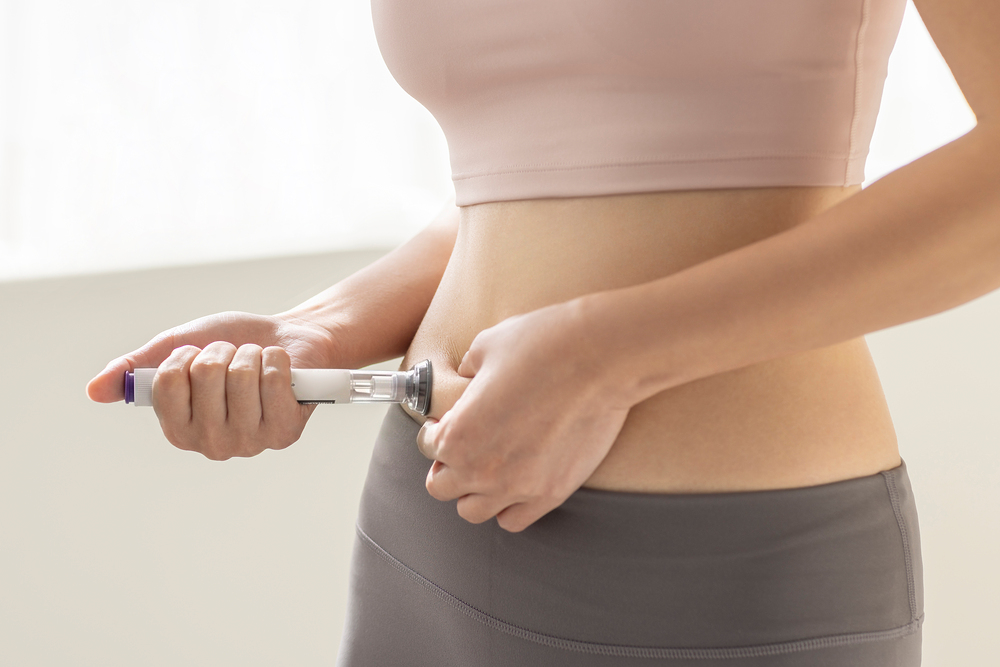

Weight-loss medications such as Mounjaro and Wegovy have changed the way many people manage obesity and long-term weight concerns. For patients who have struggled with weight for years, achieving meaningful weight loss can bring important improvements in health, mobility, and confidence.
However, some patients notice an unexpected change after losing weight.
“I am happy with my weight, but my face looks tired.”
“My body has become much slimmer, but my double chin is still there.”
“People tell me I look older now that I have lost weight.”
These concerns are often described online as “Mounjaro face.” The term generally refers to facial volume loss, skin laxity, deeper-looking folds, or a more tired appearance that becomes noticeable after significant or rapid weight loss.
Mounjaro face is not a formal medical diagnosis, nor is it necessarily a direct side effect unique to one medication. Similar facial changes can occur after substantial weight loss achieved through medication, bariatric surgery, dietary restriction, or other methods. Recent medical reviews have described volume loss, skin laxity, and more visible wrinkles following rapid weight reduction associated with GLP-1–based treatment.
What Does Mounjaro Face Look Like?
The appearance varies from person to person, but common concerns include:
- Hollowing beneath the eyes
- Reduced fullness in the cheeks or temples
- More prominent cheekbones
- Deeper-looking nasolabial folds
- Sagging around the lower cheeks or jowls
- A less defined jawline
- Loose skin beneath the chin
- A face that appears tired despite successful weight loss
Not everyone who takes a weight-loss medication will experience these changes. The degree of facial change depends on several factors, including the amount and speed of weight loss, age, genetics, baseline facial anatomy, skin elasticity and previous changes in body weight.
Why Can the Face Change After Rapid Weight Loss?
Facial fat is not simply excess tissue that should always be removed. In the right areas, it provides structural support and helps the face appear smooth, balanced and youthful.
When weight is lost quickly, the relationship between facial volume and skin elasticity can change. In my clinical experience, three factors are particularly important.
1. Loss of Supportive Facial Volume
The cheeks, temples and under-eye area contain multiple fat compartments. These compartments help support the skin and create soft transitions between facial features.
When facial volume decreases, the skin may have less structural support. The under-eye area can look more hollow, cheekbones may become more prominent, and shadows around the mouth may appear deeper.
This does not mean that all facial fat loss is undesirable. The goal is to distinguish unwanted localized fullness from volume that is supporting a healthy and balanced facial shape.
2. Skin May Not Tighten at the Same Rate as Weight Is Lost
Skin does not always contract at the same speed as the tissues beneath it.
After rapid weight loss, the reduction in underlying volume may become visible before the skin has had time to adapt. This can make the lower face appear looser and the jawline less defined.
Age, genetics, sun exposure, smoking history, previous weight fluctuations and the amount of weight lost can all influence how well the skin adjusts.
3. Reduced Food Intake May Affect Skin Support
Medications that reduce appetite can make it more difficult for some patients to consume adequate protein, essential fatty acids, vitamins and minerals.
Insufficient nutrition during aggressive weight loss may affect muscle maintenance, skin recovery and the production of structural proteins. However, it would be inaccurate to say that Mounjaro or Wegovy directly destroys facial collagen in every patient.
Patients using prescription weight-loss medications should continue to work with their prescribing physician and, where appropriate, a qualified nutrition professional to maintain adequate nutrition throughout the weight-loss process.
Why Can a Double Chin Remain After Losing Weight?
One of the most frustrating concerns patients describe is a slimmer body combined with persistent fullness under the chin.
Weight loss occurs throughout the body, but it does not occur in exactly the same proportion in every anatomical area. Genetics and individual fat-distribution patterns can make submental fat more resistant than fat in other areas.
In addition, what appears to be a double chin is not always caused by fat alone. It may involve a combination of:
- Localized submental fat
- Loose or stretched skin
- Reduced skin elasticity
- Platysma muscle activity
- Chin projection and jaw structure
- Submandibular gland prominence
This distinction is extremely important. Further fat reduction may help a patient with true localized submental fat, but it could worsen hollowing in someone whose main issue is volume loss or skin laxity.
For this reason, treatment should begin with an anatomical assessment rather than a one-size-fits-all slimming procedure.
Losing Weight and Looking Well-Balanced Are Not Always the Same
A lower number on the scale does not automatically create the facial contour a patient expected.
After significant weight loss, the objective should not be to make every area of the face smaller. Instead, the treatment plan should preserve beneficial volume, refine areas of genuine excess and improve loose skin where necessary.
At Dr. Sonyouna Clinic, post-weight-loss facial concerns are evaluated according to four separate components:
1. Remaining Localized Fat
When fullness is caused by a clearly defined pocket of facial or submental fat, a targeted facial contouring treatment may be considered.
Treatment should be precisely limited to the areas that require refinement. Indiscriminate fat reduction throughout the face can make a tired or hollow appearance more noticeable.
2. Skin Laxity
When the primary concern is loose skin rather than excess fat, energy-based tightening or lifting treatments may be more appropriate.
Depending on the patient’s skin thickness, degree of laxity and facial anatomy, radiofrequency, ultrasound or other lifting technologies may be selected to support a firmer jawline and lower-face contour.
3. Loss of Structural Support
Patients with significant cheek, temple or under-eye hollowing may not be suitable for additional facial slimming.
In these cases, the priority may be to support skin quality, collagen remodeling or facial structure before considering any further reduction treatment.
4. Overall Facial Balance
The cheek, jawline, chin and neck should not be evaluated as isolated areas. A treatment that improves one angle may negatively affect another if the entire face is not considered.
The most natural-looking result usually comes from balancing volume reduction, structural preservation and skin tightening rather than relying on a single procedure.
Can Mounjaro Face Be Prevented?
It is not always possible to prevent facial changes completely, but several strategies may help support the face and skin during weight loss:
- Follow a medically supervised weight-loss plan
- Avoid unnecessarily aggressive weight reduction
- Consume adequate protein and essential nutrients
- Include resistance training to support lean body mass
- Stay appropriately hydrated
- Protect the skin from ultraviolet exposure
- Avoid smoking
- Monitor changes in the face as well as changes on the scale
Patients should not stop or change a prescription medication because of an aesthetic concern without first speaking to the physician who prescribed it.
When Should You Consider an Aesthetic Consultation?
An assessment may be helpful if your weight has become relatively stable but you remain concerned about:
- A persistent double chin
- Loose skin beneath the jaw
- New or more visible jowls
- Loss of jawline definition
- Hollow cheeks or under-eyes
- Facial asymmetry after weight loss
- A tired appearance that does not improve as your weight stabilizes
Bring a list of your current medications, the approximate amount and speed of your weight loss, and information about any previous facial procedures. These details help the physician determine whether the concern is primarily related to fat, skin laxity, volume loss or facial structure.
A Personalized Approach to Facial Changes After Weight Loss
Mounjaro face should not be viewed as a reason to avoid medically appropriate weight-loss treatment. Successful weight management can provide significant health benefits, and not everyone develops noticeable facial changes.
It does mean, however, that rapid weight loss may require more thoughtful facial planning.
Losing weight and losing weight in a way that preserves facial balance are not always the same.
If you have achieved your weight-loss goal but remain concerned about facial sagging, hollowing or a stubborn double chin, an individualized assessment can help identify what has actually changed—and which areas should be preserved rather than reduced.
At Dr. Sonyouna Clinic in Seoul, we evaluate localized facial fat, skin elasticity, facial volume and structural balance before recommending a personalized non-surgical contouring or lifting plan.
Frequently Asked Questions
Is Mounjaro face permanent?
Some changes may become less noticeable once weight stabilizes and the skin has had time to adjust. However, significant volume loss or skin laxity may persist. The degree of improvement differs between individuals.
Does Mounjaro directly age the face?
Current evidence does not establish Mounjaro face as a separate disease or prove that the medication directly ages every patient’s skin. The visible changes are generally associated with rapid or substantial weight loss and the resulting loss of facial volume and support.
Should I stop Mounjaro or Wegovy if my face looks older?
Do not stop or adjust prescription medication without speaking to the clinician who prescribed it. Aesthetic concerns and medical weight management should be addressed separately but collaboratively.
Will a fat-dissolving injection fix Mounjaro face?
Not in every case. It may be considered when true localized fat remains, but it is not suitable when the primary concern is facial hollowing or loose skin. An accurate assessment is necessary before treatment.
When is the best time to receive facial treatment after weight loss?
Treatment is generally easier to plan once weight is relatively stable. The appropriate timing also depends on your health, medication plan, nutrition, skin condition and upcoming travel or events.
Medical Disclaimer:
This article is provided for general educational purposes and does not replace individualized medical advice, diagnosis or treatment. Prescription medications should be used only under the supervision of an appropriately qualified healthcare professional. Approved indications and product information may vary by country.