



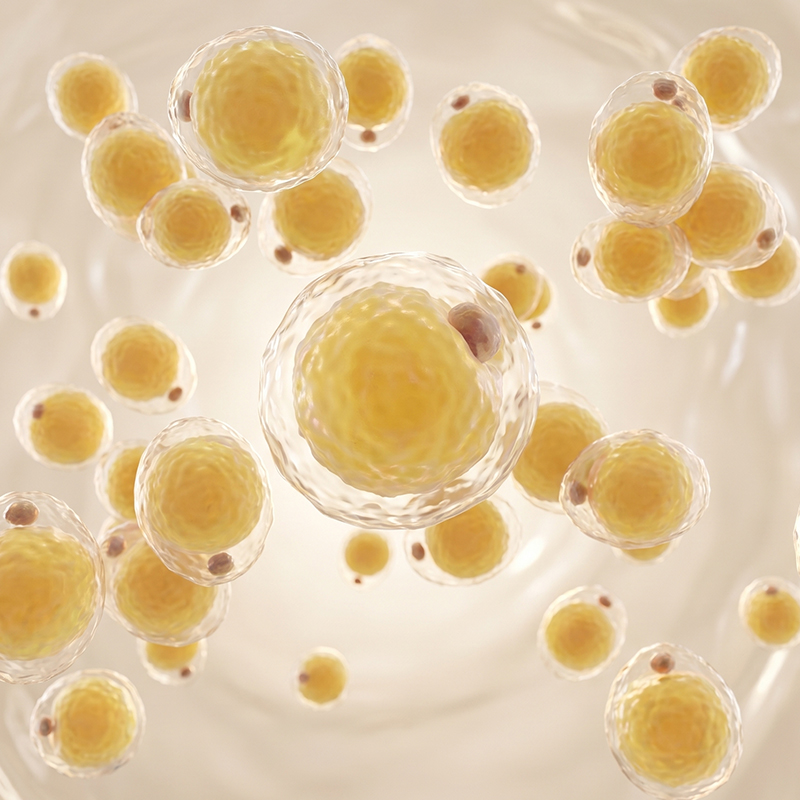
Fat Cell Size vs Fat Cell Number : Fat should be viewed through two key concepts.
Have you ever noticed that even after dieting, certain areas of your body do not seem to change easily? Or have you experienced losing weight with effort, only to gain it back again soon after?
These changes are not simply about the number on the scale. To understand body fat more accurately, it is important to understand how fat cells work.
Understanding this difference can help explain why some areas are more resistant to diet and exercise, and why body shape may vary from person to person even at the same body weight.

Fat Cell Number Is Mostly Established Before Adulthood
Fat cells are mainly formed during childhood and adolescence. After reaching adulthood, the total number of fat cells generally remains relatively stable.
This does not mean that fat cells never change at all. However, in most adults, everyday weight gain and weight loss are influenced more by changes in the size of existing fat cells rather than a dramatic change in the total number of fat cells.
The important point is that each person has a different fat cell distribution. Some people naturally store more fat in the abdomen, while others may notice fat accumulation in the arms, thighs, calves, double chin, or back area.
This is one reason why two people with the same weight can have very different body shapes.
Weight Change Is Mainly About Fat Cell Size
In adults, changes in body weight are mostly related to changes in the size of fat cells.
When weight increases, fat cells store excess energy and expand, much like a balloon filling up. When weight decreases, stored fat is used as energy, and the fat cells become smaller.
This means that when you lose weight through diet and exercise, the fat cells themselves do not necessarily disappear. Instead, they shrink as the amount of stored fat inside them decreases.
In other words, general fat loss is usually a reduction in the volume of stored fat, not the complete removal of the fat cells themselves.
Why Does Weight Come Back So Easily?
The reason weight can return after dieting can also be understood through this fat cell structure.
Even after successful weight loss, the number of fat cells usually remains. If lifestyle habits become less consistent, the shrunken fat cells can enlarge again by storing more energy.
This is why some people feel that they “gain weight easily” in the same areas. The storage space still exists, so if excess calories are repeatedly stored, the fat cells can increase in size again.
This is especially noticeable in areas where fat cells are densely distributed or where fat has been stored for a long time.
Two Ways to Approach Fat Reduction: Size Reduction vs Cell Removal
When considering body contouring or fat reduction, it is useful to understand the two main approaches.
Fat Cell Size Reduction
This refers to reducing the amount of fat stored inside each fat cell. Diet, exercise, improved sleep, and overall lifestyle management mainly work through this mechanism.
The fat cells remain in the body, but they become smaller as stored fat decreases. This approach is essential for overall health and weight management.
Fat Cell Number Reduction
This approach focuses on reducing the number of fat cells in a specific area. Unlike general weight loss, which mainly changes fat cell size, targeted body contouring procedures aim to reduce the fat storage space in localized areas.
Because the approach is different, the way the body line changes may also differ. For example, when a specific area has a high concentration of fat cells, reducing the fat cell burden in that area may help improve localized body contours.
Why This Difference Matters for Body Shape
Fat is not only about “how much” you have. It is also about where the fat cells are located, how large they are, and how easily they respond to lifestyle changes.
This is why a person may lose weight overall but still feel that the arms, abdomen, thighs, calves, or double chin remain unchanged.
For more realistic and lasting body contour management, it is important to understand whether the concern is mainly related to overall weight, localized fat accumulation, skin elasticity, or body line balance.
A proper approach should be selected based on the individual’s fat distribution, body type, and treatment goals.
Conclusion: Body Contouring Starts with Understanding Fat Cell Size vs Fat Cell Number.
Reducing body fat is not only about lowering the number on the scale.
Diet and exercise mainly reduce the size of fat cells, while certain targeted body contouring approaches focus on reducing the number of fat cells in a specific area.
Understanding this difference can help you choose a more realistic strategy for managing stubborn fat and improving body lines.
Rather than focusing only on weight loss, it is important to look at your own fat cell distribution and body shape characteristics. This can lead to a more personalized and sustainable approach to body contouring.