



Introduction
When patients begin exploring body contouring options, one question arises more often than any other: Should I choose a non-surgical approach or proceed with liposuction?
Both methods can effectively reduce unwanted fat deposits. However, the right choice depends entirely on your individual goals, lifestyle, and the type of result you hope to achieve.
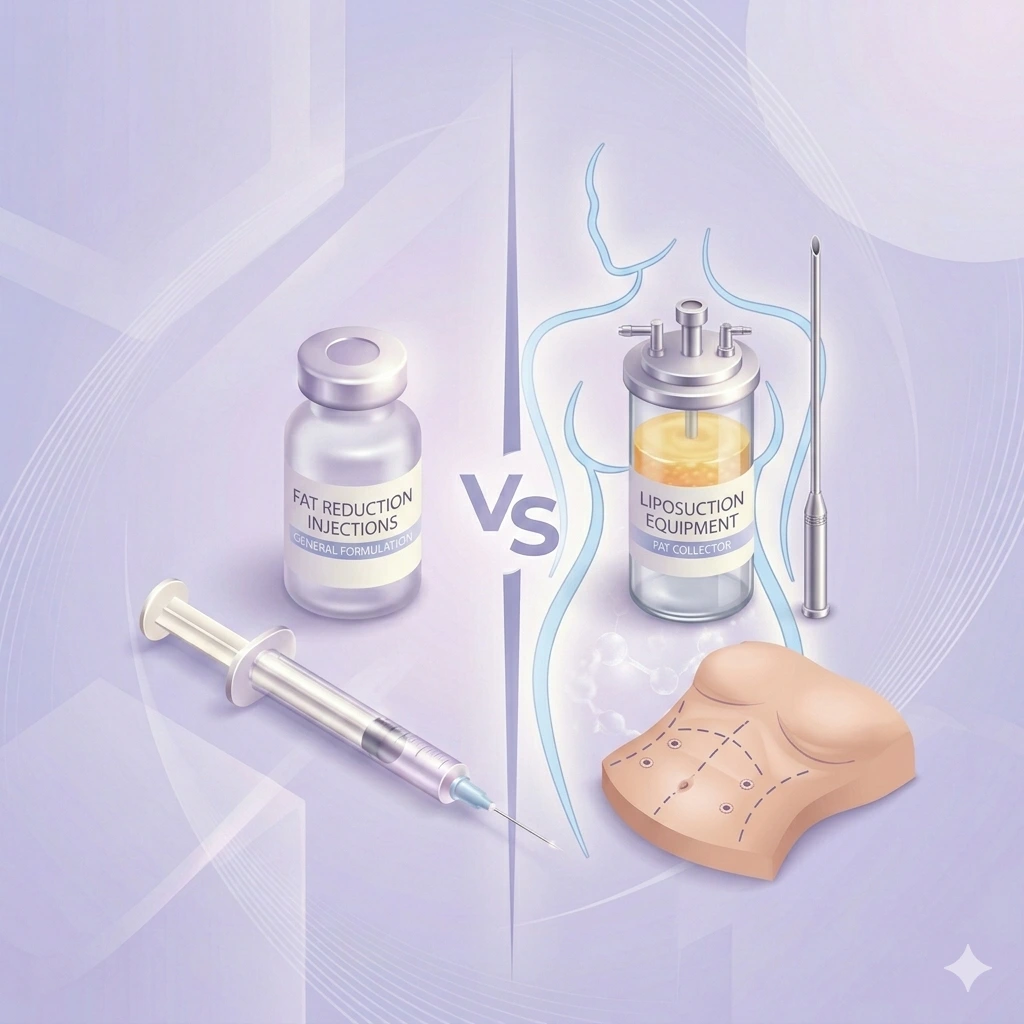
This article explores the key differences between liposuction vs fat reduction injections, helping you understand which approach may align with your needs.
Understanding the Two Approaches
Before comparing outcomes, it helps to understand how each method works at a fundamental level.
What Is Liposuction?
Liposuction is a surgical procedure performed under general or regional anesthesia. A surgeon makes small incisions in the treatment area and inserts a thin tube called a cannula. The cannula is moved beneath the skin to break up fat deposits, which are then suctioned out using a vacuum-like device. This is how liposuction works.
Key characteristics:
- Performed in a surgical setting
- Requires anesthesia
- Involves incisions and sutures
- Removes larger volumes of fat in a single session
- Typically requires significant recovery time
What Are Non-Surgical Fat Reduction Injections?
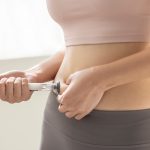
Non-surgical fat reduction injections use precisely formulated compounds to dissolve fat cells without incisions or anesthesia. The solution is injected directly into targeted areas using fine needles. Over several weeks, the body naturally processes and eliminates the dissolved fat cells.
Key characteristics:
- Performed in an outpatient clinic setting
- No anesthesia required (topical numbing used for comfort)
- No incisions or sutures
- Ideal for smaller, targeted areas
- Minimal to no downtime
Comparison at a Glance
| Factor | Liposuction | Non-Surgical Fat Reduction Injections |
| Invasiveness | Surgical (incisions, anesthesia) | Non-surgical (injections only) |
| Downtime | 1–2 weeks or more | Minimal to none |
| Anesthesia | General or regional required | Topical numbing only |
| Treatment Time | 1–4 hours per session | 15–45 minutes per session |
| Results Timeline | Immediate with swelling; final results at 3–6 months | Gradual over 4–12 weeks |
| Ideal Areas | Larger volumes (abdomen, flanks, thighs) | Smaller, defined areas (chin, jawline, arms, calves, trapezius) |
| Fat Removal Volume | Can remove larger quantities | Designed for precise contouring |
| Skin Tightening Effect | Minimal | Mild to moderate tightening |
| Scarring | Small incision scars | No scarring |
| Recovery | Compression garments, activity restrictions | Return to normal life immediately |
Detailed Considerations for Your Decision
1. Downtime and Lifestyle
For many patients, the ability to return to daily activities immediately is a deciding factor.
Liposuction typically requires one to two weeks away from work and social activities. Patients often wear compression garments for several weeks and must avoid strenuous exercise for four to six weeks. Swelling and bruising can persist for months.
Non-surgical fat reduction injections offer a distinctly different recovery experience. Patients receiving these treatments can return to normal life immediately after their session. Some mild swelling or tenderness may occur, but these effects do not typically interfere with daily routines. Many international patients travel the same day after treatment.
Consider this: If your schedule cannot accommodate extended recovery time, non-surgical options may align better with your lifestyle.
2. Results and Aesthetic Goals
Both approaches can produce excellent results, but the nature of those results differs.
Liposuction is effective for removing larger volumes of fat. Patients seeking significant reduction in areas like the abdomen, flanks, or thighs may find liposuction more appropriate for their goals.
However, liposuction is primarily a fat removal procedure. It does not inherently address skin laxity or fine contouring irregularities. In some cases, patients may be left with loose skin following large-volume fat removal.
Non-surgical fat reduction injections excel at precise contouring. These treatments are designed to refine specific areas, such as the jawline, double chin, upper arms, or calves, with a focus on natural-looking results. Because the process is gradual, the body adapts smoothly, and the outcome appears subtle and balanced.
Additionally, many non-surgical fat reduction injections can create a mild skin-tightening effect in the treated area, which contributes to a more refined overall contour.
Consider this: If you seek subtle, natural refinement of specific areas with no scarring and gradual improvement, non-surgical injections offer a compelling alternative to surgery.
3. Safety Profile
Safety is paramount in any aesthetic procedure.
Is liposuction safe? Well, Liposuction carries risks associated with surgery and anesthesia, including infection, scarring, fluid accumulation, and anesthesia complications. While serious complications are rare when performed by qualified surgeons, the risks are inherent to any surgical procedure.
Non-surgical fat reduction injections have a more favorable safety profile. Quality formulations are developed without steroids or hyaluronidase, reducing the risk of adverse reactions. The treatment is performed in a clinical setting without general anesthesia. Side effects are typically limited to temporary swelling, tenderness, or minor bruising at injection sites.
Consider this: For patients who prefer to avoid surgery, anesthesia, and extended recovery, non-surgical options represent a lower-risk alternative.
4. Treatment Areas
While there is some overlap, each approach is better suited to certain areas of the body.
Liposuction is commonly used for:
- Abdomen and flanks
- Thighs
- Back
- Male chest (gynecomastia)
Non-surgical fat reduction injections excel in:
- Double chin and jawline
- Cheek area
- Trapezius
- Upper arms
- Abdomen (small to moderate)
- Thighs (inner and outer)
- Calves
- Neck and breast areas
Non-surgical treatments are particularly popular for areas where surgical intervention may be excessive or where patients desire a more precise, controlled reduction.
5. Long-Term Results and Maintenance
Both approaches produce permanent fat reduction in the treated areas, provided the patient maintains a stable weight.
Liposuction physically removes fat cells from the body. Those cells do not grow back. However, remaining fat cells in the treated area can expand if significant weight gain occurs.
Non-surgical fat reduction injections work similarly by destroying fat cells, which are then naturally eliminated by the body. Once eliminated, these cells do not regenerate. The results are considered semi-permanent, with longevity depending on lifestyle factors.
Both surgical and non-surgical treatments are not substitutes for a healthy lifestyle. They are tools for addressing localized fat deposits that do not respond to diet and exercise.
Making Your Decision: Which one to choose?
The question of whether non-surgical fat reduction injections or liposuction is “better” does not have a universal answer. The right choice depends on:
- The volume of fat you wish to address
- The specific areas you want to treat
- Your tolerance for downtime and recovery
- Your comfort level with surgery and anesthesia
- The type of result you hope to achieve
Who Should Choose Liposuction?
Liposuction may be the right choice if:
- You need large-volume fat removal
- You are comfortable with surgery
- You can commit to recovery time
- You want faster, more dramatic results
Who Should Choose Fat Reduction Injections?
Fat reduction injections are a better fit if:
- You have moderate fat concerns
- You prefer a non-surgical approach
- You want minimal downtime
- You value subtle, natural-looking results
- You need a treatment that fits into a busy or travel-heavy lifestyle
Why Patients Choose Dr. Sonyouna Clinic for Non-Surgical Fat Reduction
At Dr. Sonyouna Clinic, we bring decades of expertise to every treatment. Our Magic CAT Injection is a patented technology developed by our founder, Dr. Youna Son, and is available exclusively at our clinic. With over 200,000 procedures performed and patients from 30+ countries, we have earned a reputation as a trusted destination for non-surgical aesthetic care.
Our approach is defined by:
- Precision: Every treatment is customized to your unique anatomy
- Safety: We use only FDA- and KFDA-approved devices and injectables
- Natural Results: We enhance your existing features, never overcorrecting
- International Accessibility: English-speaking staff and one-day treatment programs for traveling patients
Take the Next Step
Choosing between surgical and non-surgical body contouring is a personal decision that benefits from expert guidance. The doctors at Dr. Sonyouna Clinic are here to provide honest, individualized recommendations based on your goals and anatomy.
Contact us to schedule a consultation:
- Phone: +82-2-3443-1117
- WhatsApp: Message us
- KakaoTalk: Chat with us
- Email: [email protected]
Whether you are in Seoul or planning a visit from abroad, our team is ready to support you with personalized care and world-class expertise.